Cultural Triangle and Heritage Focus
A five-day heritage framework connecting Sigiriya, Dambulla, Anuradhapura, Polonnaruwa and Kandy without pretending every site fits one rushed loop.
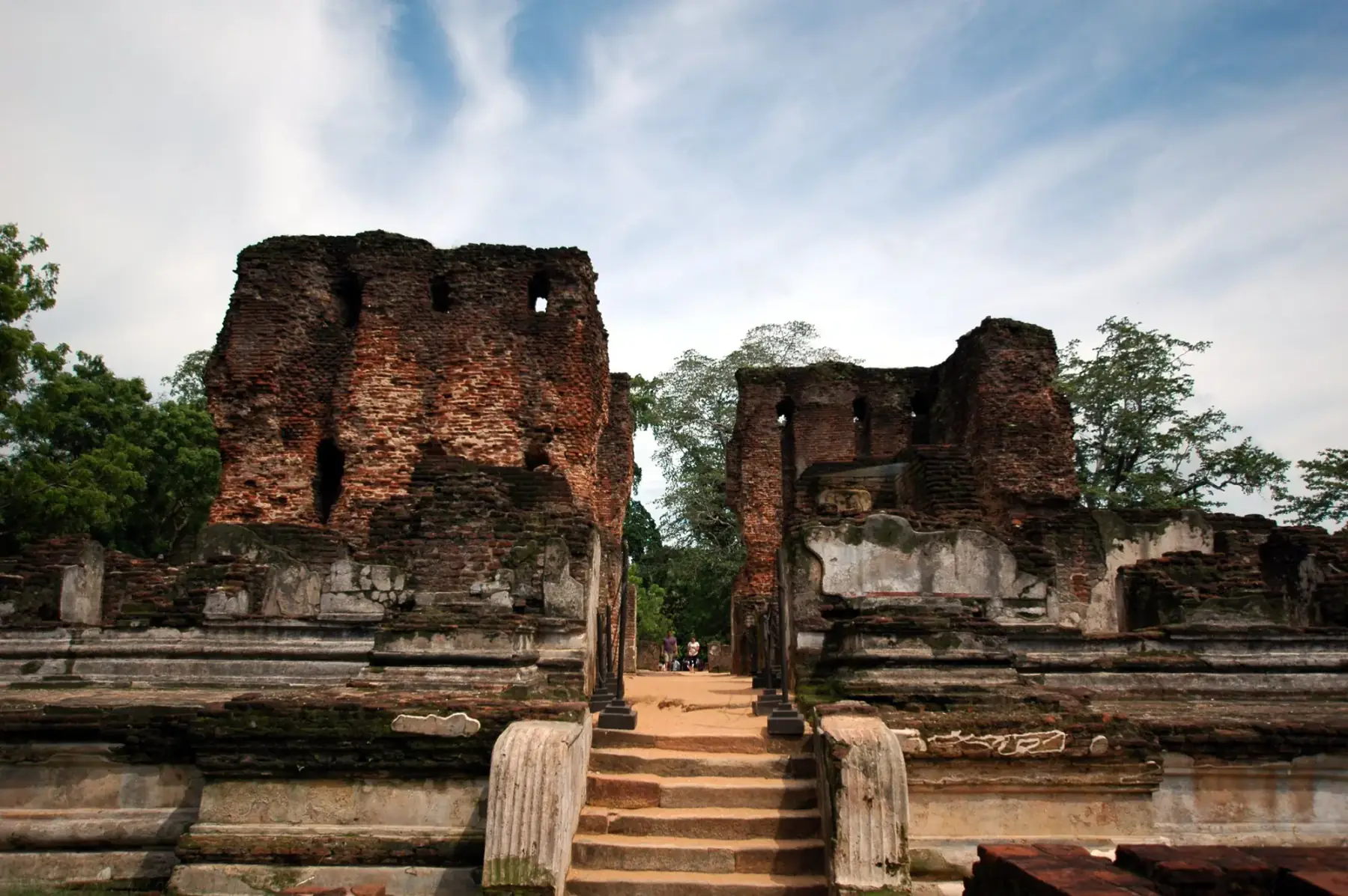
Day by day
- Day 1
Sigiriya
Use the day for Sigiriya's wider archaeological property; confirm current access and climb conditions.
- Day 2
Dambulla
Visit the active cave temple with current ticket, access and sacred-site guidance.
- Day 3
Anuradhapura
Choose priority sacred and archaeological places; include Mihintale only if transport and site time remain realistic.
Sacred City of Anuradhapura, Jaya Sri Maha Bodhi, Ruwanwelisaya, Mihintale
- Day 4
Polonnaruwa
Plan the ancient city by selected monuments rather than relying on a compactness comparison.
- Day 5
Kandy
Close with Kandy's living sacred-city context; verify onward transport separately.
This five-day framework connects five major heritage bases while keeping one main place-purpose per day. It is still an ambitious route: confirm transfers and current site access before treating the sequence as fixed.
Who this route suits
Choose it when cultural heritage and living sacred sites are the trip's priority. It is not an all-island first-trip sampler: it excludes beaches, wildlife drives and most hill-country walking. The how-many-days guide can help if those are essential.
How to use the five days
- Sigiriya: focus on the archaeological property and climb conditions.
- Dambulla: visit the active cave temple without assuming it is a quick add-on.
- Anuradhapura: choose a limited group of sacred and archaeological priorities. Treat Mihintale as optional, not automatic.
- Polonnaruwa: select the monuments that answer your interests and verify site transport.
- Kandy: understand the living sacred-city context and the Temple of the Tooth.
UNESCO lists the official properties; the Central Cultural Fund provides current heritage-site information. Check tickets, opening arrangements, religious observances and transport close to travel. If the route begins to feel like a transfer exercise, remove one base rather than shrinking every visit.
A more realistic base decision
Five heritage days do not necessarily require five accommodation changes. Sigiriya and Dambulla can be compared as potential bases for the first part of the route. Anuradhapura and Polonnaruwa are separate destination and site decisions; plot their heritage zones and entrances before selecting accommodation.
The listed stop sequence describes daily priorities, not a requirement to check out each morning.
Day 1: Ancient City of Sigiriya
Treat Sigiriya as a wider archaeological property with gardens, elevated areas and current site management. Verify official tickets and access, then assess weather exposure and physical capability. Do not rely on a universal step count or visit duration.
If the group cannot complete the elevated route, the visit can still be planned around accessible parts of the property, subject to current official guidance. Do not invent an accessibility guarantee.
Day 2: Rangiri Dambulla Cave Temple
Dambulla is both a World Heritage property and a living Buddhist site. Prepare conservative clothing, follow footwear and photography instructions, and allow for the physical route to the caves. Confirm current ticket and entry arrangements through responsible sources.
The Sigiriya-or-Dambulla guide helps choose the base. It does not rank the heritage value of the two properties.
Day 3: Anuradhapura
Anuradhapura contains multiple sacred and archaeological priorities. Choose a limited set before arrival. The Sacred City of Anuradhapura guide has the current ticket, hours and dress code. Jaya Sri Maha Bodhi and Ruwanwelisaya are active worship settings; other monastic and archaeological areas answer different interests.
Add Mihintale only after checking transport, hillside access, weather and available time. It is a separate place, not evidence that the Anuradhapura day has spare capacity.
Day 4: Polonnaruwa
Select the parts of the Ancient City that match the traveller's interest and verify transport inside or around the heritage zone. Avoid describing Polonnaruwa as universally “easier,” “better preserved” or a fixed-duration visit without evidence.
If the transfer from Anuradhapura consumes too much of the day, decide whether Polonnaruwa or Kandy is the weaker priority rather than rushing both. Anuradhapura or Polonnaruwa? compares the two cities.
Day 5: Kandy
Kandy closes the route with a different heritage context: a living sacred city and the active Temple of the Tooth. Confirm the temple's current arrangements and distinguish the specific institution from the wider World Heritage property.
Protect the onward transfer. Do not add a rail journey simply because Kandy is associated with the hill-country line; check the exact date and stations.
What this route excludes
The route does not include a safari, beach, tea-country stay or broad hill-country loop. Minneriya may look close to the Sigiriya area, but adding a park introduces a permit, operator, entrance and wildlife decision. Include it only by removing or shortening another priority honestly.
Heritage-route checklist
- Confirm each property's current official ticket or access source.
- Mark which places are active worship settings.
- Check clothing, footwear, photography and ceremony arrangements separately.
- Verify the actual transfer between heritage zones.
- Keep one priority per day that survives a delay.
- Remove a site before turning all five days into partial visits.
Adding a safari? Habarana sits between Sigiriya and Polonnaruwa, with Minneriya National Park on the road east.